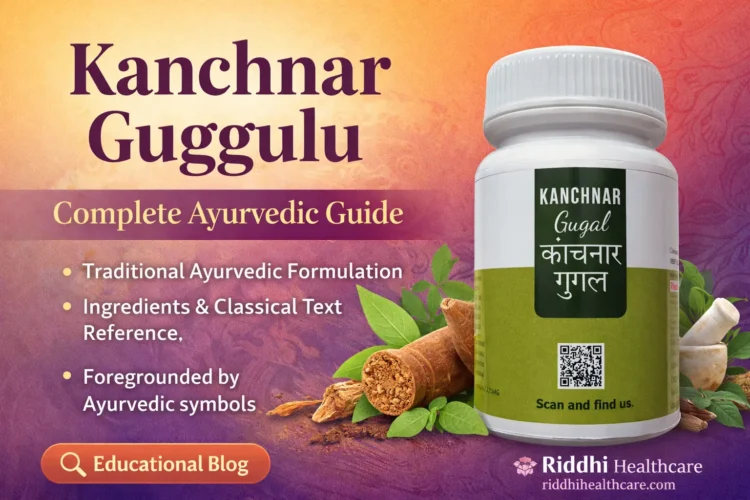
Kanchnar Guggulu: Ingredients, Benefits and Uses.
Kanchnar Guggulu is a well-known classical Ayurvedic formulation (Shastrokt Yog) described in traditional Ayurvedic literature, including Sharangdhar Samhita. This formulation has been used for centuries within Ayurveda as part of…

Kanchnar Guggulu is a well-known classical Ayurvedic formulation (Shastrokt Yog) described in traditional Ayurvedic literature, including Sharangdhar Samhita. This formulation has been used for centuries within Ayurveda as part of holistic wellness practices.
Kanchnar Guggulu, also locally known as Kanchnar Gugal in some parts of India, is a classical Ayurvedic formulation…
This article is written for educational and informational purposes only, following modern search, AI, and Google guidelines. It does not replace professional medical advice.
What Is Kanchnar Guggulu?
Kanchnar Guggulu is a classical Ayurvedic aushadhi prepared using Kanchanar bark (Bauhinia variegata), purified Guggulu (Commiphora mukul), and supporting herbal ingredients such as Triphala and Trikatu.
In Ayurveda, this formulation is traditionally discussed in the context of Kapha-related balance and is used as part of broader lifestyle and dietary routines under expert guidance.
Classical Reference
Kanchnar Guggulu is mentioned in Sharangdhar Samhita, one of the authoritative classical Ayurvedic texts that systematically documents formulations, preparation methods, and traditional usage.
Being a Shastrokt formulation, Kanchanar Gugal follows a fixed classical composition rather than a proprietary recipe.
Ingredients of Kanchnar Gugal
Kanchanar Chhal (Bauhinia variegata)
Traditionally described in Ayurveda for its role in maintaining tissue balance.
Shuddha Guggulu (Purified Commiphora mukul)
Guggulu undergoes classical purification (Shodhana) before use and is widely referenced in Ayurvedic texts.
Triphala
A classical combination of three fruits, traditionally used in many Ayurvedic formulations.
Trikatu
A blend of Pippali, Maricha, and Shunthi, described in Ayurveda for digestive balance.
Varun Chhal
Traditionally included in formulations mentioned in classical texts.
How Kanchanar Gugal Is Traditionally Used in Ayurveda
In Ayurvedic practice, Kanchanar Gugalu is not used in isolation. It is typically recommended as part of:
- A structured Ayurvedic routine
- Diet and lifestyle adjustments
- Individual body constitution (Prakriti) assessment
The dosage and duration are always determined by a qualified Ayurvedic practitioner.
Diet and Lifestyle Considerations (Ayurvedic View)
Ayurveda emphasizes that food and lifestyle play a significant role in overall balance.
Traditionally, individuals are advised to:
- Follow a light and balanced diet
- Avoid excessively heavy, oily, or processed foods
- Maintain regular daily routines
Specific dietary guidance may vary from person to person.
Who May Learn About Kanchnar Gugal?
This formulation is commonly studied by:
- Students of Ayurveda (BAMS)
- Individuals interested in classical Ayurvedic knowledge
- People exploring traditional wellness systems
It is not intended for self-medication or disease treatment.
Important Safety & Disclaimer
Kanchnar Guggulu is a classical Ayurvedic medicine. Information provided here is for educational purposes only.
- Not intended to diagnose, treat, cure, or prevent any disease
- Always consult a qualified Ayurvedic or healthcare professional before use
- Results and recommendations may vary between individuals
Conclusion
Kanchnar Guggulu represents the depth of classical Ayurvedic knowledge preserved through texts like Sharangdhar Samhita. When understood and used responsibly under expert guidance, it continues to be studied and referenced within traditional wellness systems.
For authentic classical Ayurvedic products, always choose manufacturers who follow GMP standards and traditional preparation methods.
FAQ about Kanchanar Gugal
What is Kanchnar Guggulu in Ayurveda?
Kanchnar Guggulu is a classical Ayurvedic medicine described in ancient texts like Sharangdhar Samhita.
It is traditionally used to support the management of Granthi (glandular swellings), Apachi, and Kapha-related imbalances in the body.
Is Kanchnar Guggulu a classical or proprietary Ayurvedic medicine?
Kanchnar Guggulu is a classical Ayurvedic formulation (Shastrokt Yog).
It is not a proprietary medicine and is prepared strictly according to formulations mentioned in authoritative Ayurvedic texts.
What are the traditional uses of Kanchnar Guggulu?
In Ayurveda, Kanchnar Guggulu is traditionally used to:
Support reduction of glandular swellings
Help balance Kapha and Meda dosha
Support healthy metabolism
Assist in managing conditions related to abnormal tissue growth
(Uses are based on classical Ayurvedic literature.)
Which Ayurvedic text mentions Kanchnar Guggulu?
Kanchnar Guggulu is described in Sharangdhar Samhita, one of the respected classical texts of Ayurveda that focuses on formulations and dosage forms.
How is Kanchnar Guggulu usually taken?
Traditionally, Kanchnar Guggulu is taken as advised by an Ayurvedic physician, commonly with warm water or as directed based on individual body constitution (Prakriti).
Can everyone take Kanchnar Guggulu?
Kanchnar Guggulu should always be taken under the guidance of a qualified Ayurvedic doctor, especially:
Pregnant or breastfeeding women
People with chronic medical conditions
Those already taking long-term medication
Does Kanchnar Guggulu have side effects?
When taken in proper dosage under medical supervision, Kanchnar Guggulu is generally well tolerated.
Self-medication or excessive dosage is not recommended in Ayurveda.
Why is Kanchnar Guggulu often recommended for Kapha imbalance?
According to Ayurveda, Kanchnar bark and Guggulu resin help balance Kapha dosha and support the breakdown of excess tissue (Granthi), which is why this formulation is traditionally used.
Article compiled under the guidance of Dr. Pinesh Shah (BAMS)