
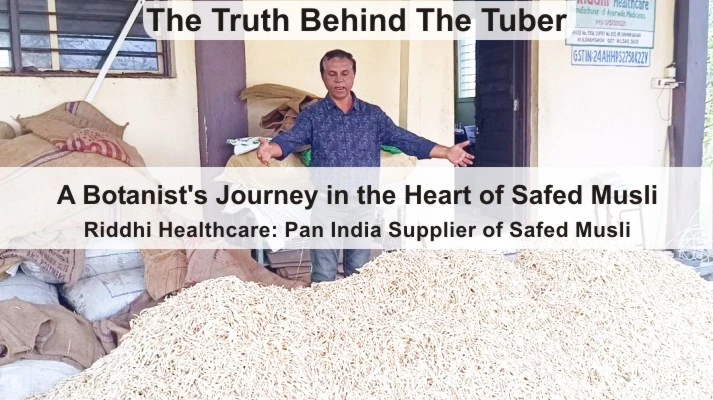
Safed Musli (Chlorophytum Borivilianum)

🌿 Introduction to Safed Musli
Safed Musli (Chlorophytum borivilianum) is a well-known Ayurvedic herb valued for its role in supporting strength, stamina, and overall wellness. Traditionally used in classical formulations, it has gained popularity among individuals as well as herbal product manufacturers.
The plant develops underground fleshy tuberous roots which, after harvesting and proper processing, are used either as raw roots or converted into powder (churna).
Today, Safed Musli is widely used not only for personal wellness but also in Ayurvedic medicines, nutraceuticals, and herbal formulations.
Safed Musli is often spelled as safed mushli, safed moosli, shwet musli etc.
At Riddhi Healthcare, we work closely at the ground level—sourcing, handling, and supplying Safed Musli with a focus on natural quality, proper drying, and reliable supply. Riddhi Healthcare is a leading suppliers of Safed Musli Pan India from a small quantity from e commerce store to a bulk quantity in tons. Riddhi Healthcare can fulfill all your bulk requirements of Original Safed Musli.
If you are planning for white labeling or third party manufacturing of Ayurvedic, Nutriceutical or Dietary Safed Musli product, Riddhi Healthcare will provide you all the guidance.
🌿What is Safed Musli?
Safed Musli is not just a “supplement”—it is a natural agricultural product.
While many people only see the fine white powder in a bottle, the journey begins deep in the soil. Scientifically known as Chlorophytum borivilianum, it belongs to the Liliaceae family. It is a rare herb that grows naturally in the thick forests of India but is now widely cultivated due to its high demand in the global herbal market.
It’s All About the Roots
The “magic” of Safed Musli lies entirely in its tuberous roots. These slender and fleshy, one to four inches long tubers are packed with essential bio-active compounds called Saponins.
Unlike synthetic supplements created in a lab, Safed Musli:
- Is Season-Dependent: It is typically planted at the start of the monsoon and harvested in the winter.
- Requires Precise Soil: It thrives best in well-drained, sandy-loam soil rich in organic matter.
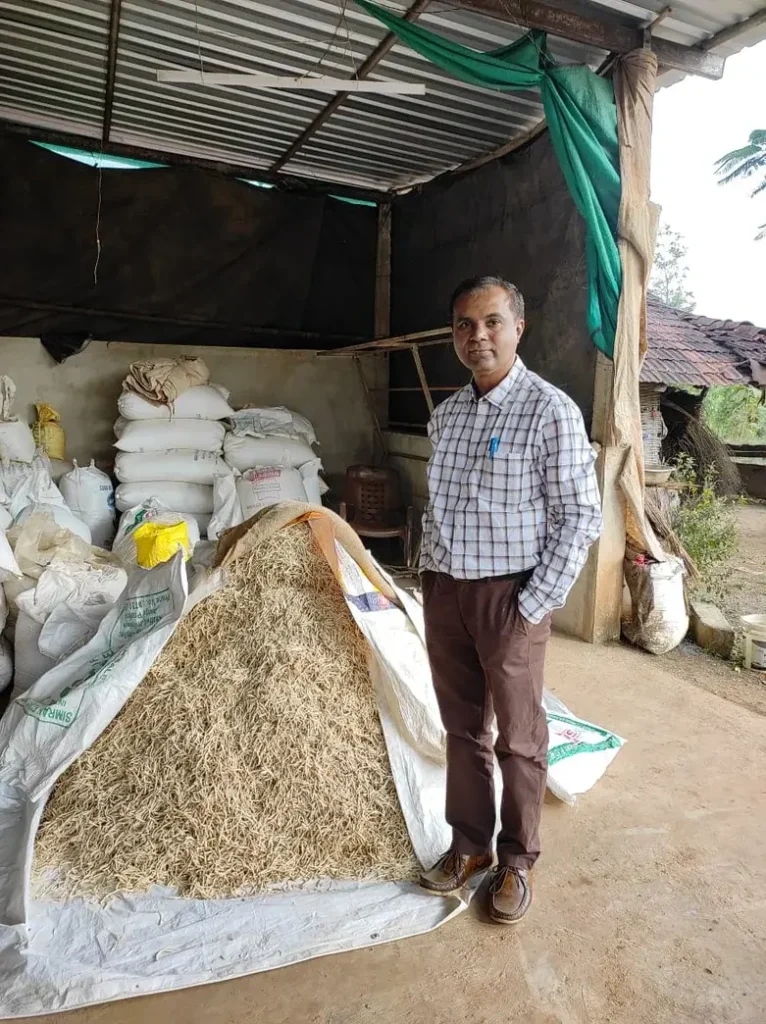
- Demands Careful Processing: From the moment it leaves the ground (as seen in the photo above), it must be peeled, cleaned, and dried rapidly to maintain its medicinal potency.
Understanding that Safed Musli is a crop—not a chemical—is why we prioritize source-level quality. By finalizing deals directly at the farmer’s doorstep, we ensure that the tubers are harvested at the peak of their maturity, ensuring the highest possible saponin content for our clients.
Safed Musli Plantation and Farming: The Complete Life Cycle
“Not only will I show you the safed musli farm, but I will show you the whole story from start to finish.”
How to Select the Best Planting Material of Safed Musli
“In the world of Safed Musli, your harvest is only as good as your ‘Seed’ (planting material). If you start with weak or diseased tubers, no amount of fertilizer can save the crop.
Here is what we look for at the ground level:
- Weight and Firmness: Good planting material should feel heavy and solid in your hand. If the tuber feels light or ‘hollow,’ it has lost its energy and may not sprout properly.
- The ‘Fingers’: Look for tubers that have thick, healthy ‘fingers’ (clusters). These clusters contain the food supply for the young plant.
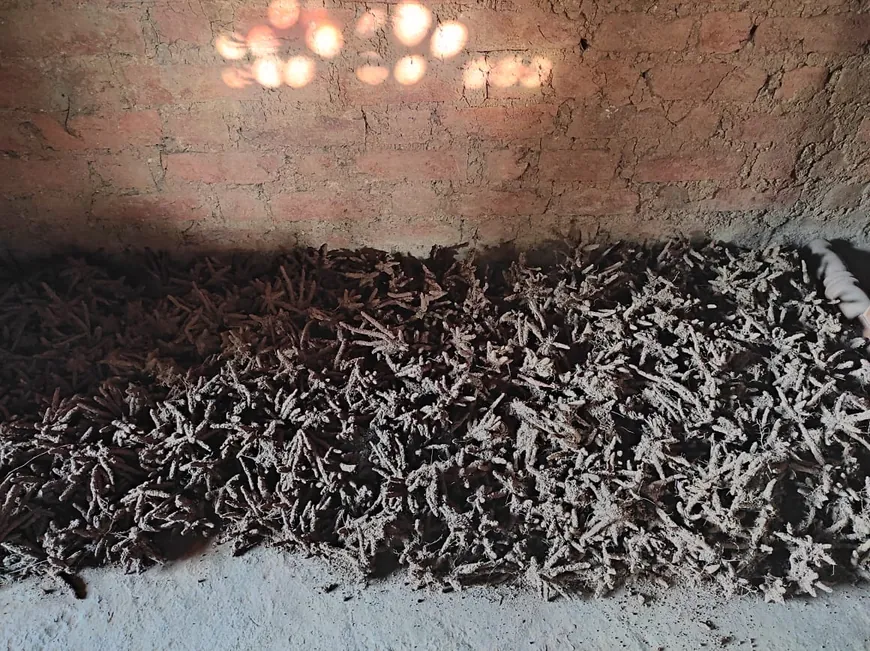
- Moisture and Storage: As you can see in the photo, safed musli farmers keep their planting material in a cool, shaded area. It should never be completely-dry, but it should also not be soaking wet, or it will catch fungus (rot) before it even reaches the field.
- Disease-Free: Check for any black spots or soft patches. A clean, earthy-brown tuber is a sign of a healthy start.”
Safed Musli Farm
“The life cycle of Safed Musli farming is a 4 to 5-month journey that begins with the first monsoon rains in June. It starts with selecting high-quality planting material—firm, healthy tubers (as seen in the first photo) that are carefully sown into well-drained soil. As the rainy season progresses, the plantation transforms into a lush green field. However, the most critical phase occurs after the rains stop. In the second photo, you can see the Safed Musli farm at maturity; when the leaves begin to yellow and dry, the plant is naturally shifting all its medicinal energy into the underground roots. Waiting for this natural sign of maturity, rather than harvesting early for a quick profit, is what ensures the highest saponin content and premium quality.”
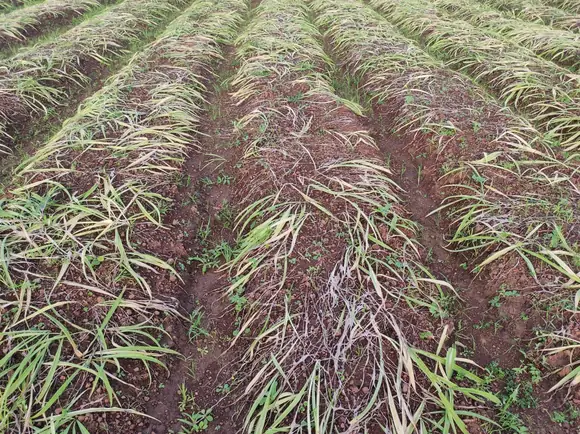
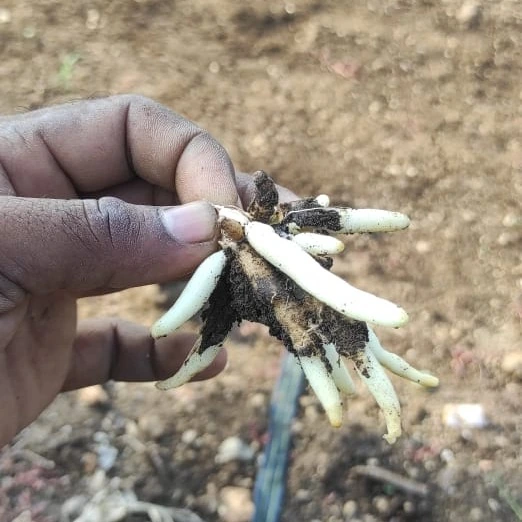
“To the left, you see the field at its peak. But look at the image on the right—this is what is happening beneath the surface. Farmers regularly pull samples like this one to check the development of the ‘roots.’ Even when the leaves look ready, farmers check the thickness and color of these fresh roots. If they aren’t firm and bright white, we wait. This is the difference between a ‘commercial’ harvest and a ‘quality’ harvest.”
The Journey of Safed Musli from Soil to Shelf:
Why Post-Harvest Handling Defines Quality
Safed Musli is a delicate agricultural product. Its medicinal value isn’t just grown in the soil; it is preserved through careful human effort. At Riddhi Healthcare, good farmers believe that the quality of the final “white gold” depends on four critical factors: how it is grown, when it is harvested, and most importantly, how it is peeled and dried.
The Post-Harvest Process: A Race Against Time
Once the roots are harvested from the earth, the clock starts ticking. To ensure the highest grade, safed musli farmers follow a strict multi-step process:
- Thorough Cleaning: Roots are first cleaned of all field soil and debris.
- Expert Peeling: The outer skin must be removed carefully. This is often done manually by skilled workers. If the peeling is inconsistent, the final product looks unappealing and ages poorly.
- Multiple Washes: Farmers wash the peeled roots several times in clean water to ensure no impurities remain.
- Natural Sun Drying: This is the most sensitive stage. The roots must be dried under the sun until they reach a perfect moisture level (typically 3% to 5%).
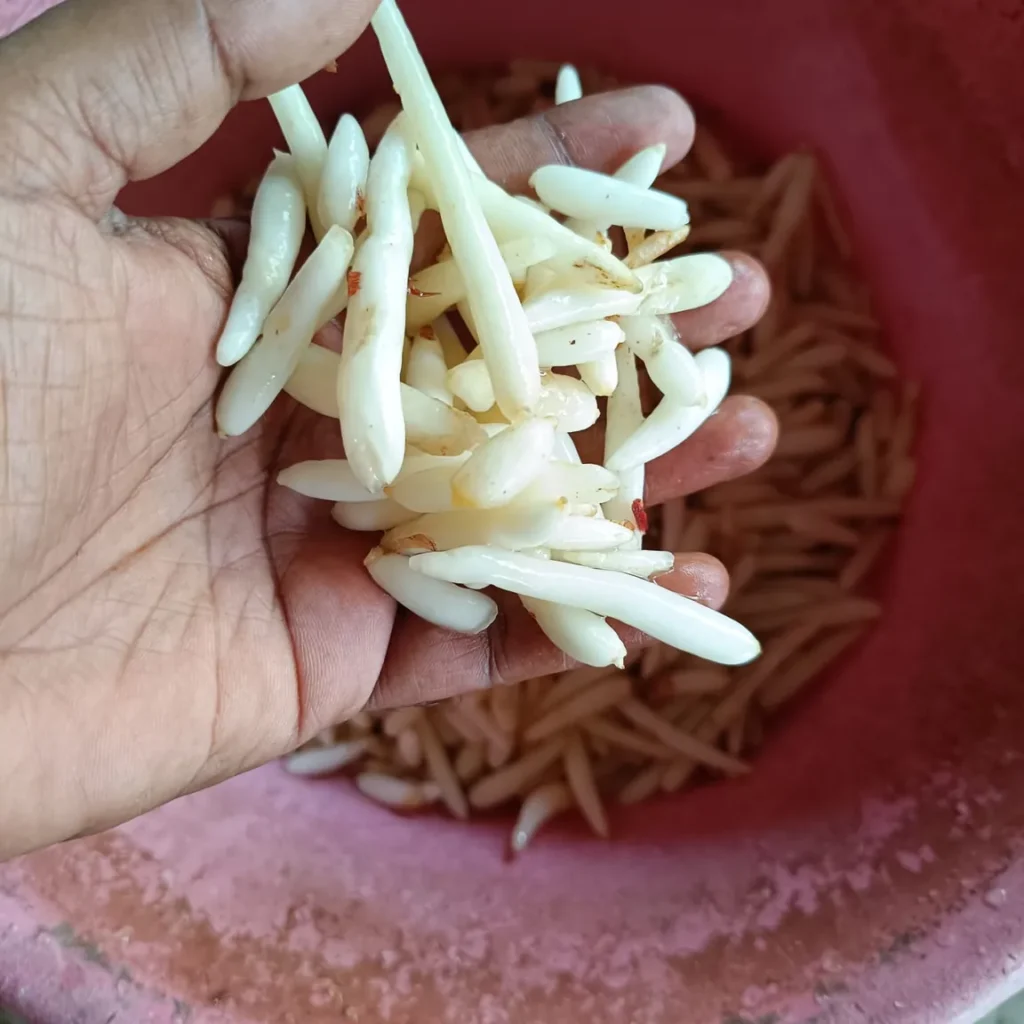
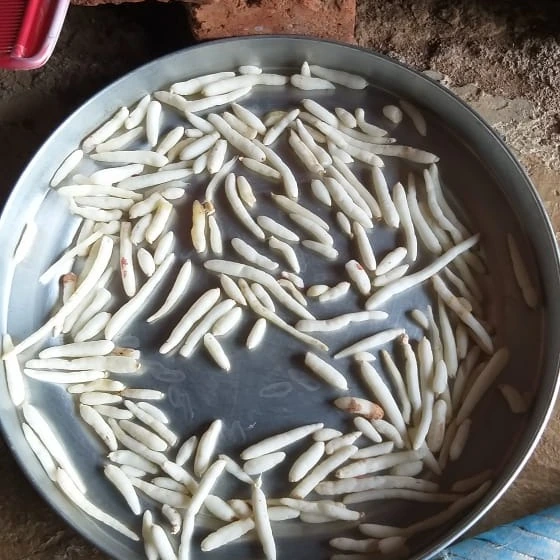
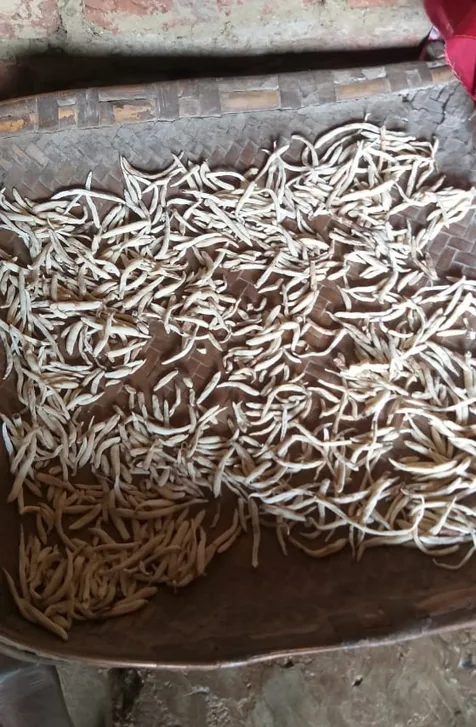
Solar Tunnel & Farmer
In the traditional Safed Musli supply chain, the labor-intensive work of peeling and washing is done by the farmers at the village level. Their hands have the experience to peel these delicate roots without breaking them.
However, at Riddhi Healthcare, we provide the final layer of quality control. If the weather is cloudy or the humidity is high, traditional sun-drying can fail. That is where we step in with our Solar Tunnel facility. While we primarily use this for drying Moringa leaves, it is a lifesaver for Safed Musli. It allows us to finish the drying process in a controlled, hygienic environment, ensuring the roots stay bright and ‘snap-dry’ even when the weather isn’t perfect.
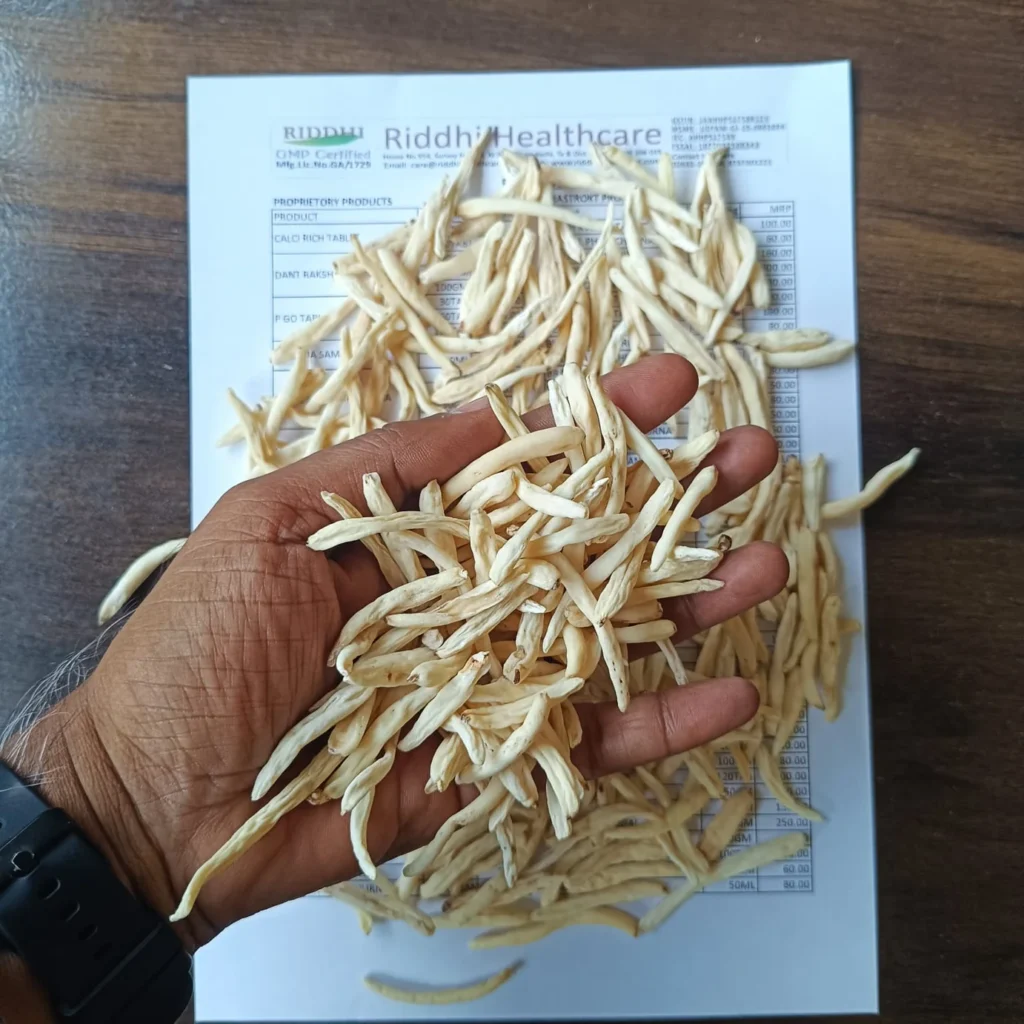
“In the image above, you can see what Premium Safed Musli looks like—it is bright, clean, and free of any spots. This is the result of perfect harvesting, peeling, and solar drying.
However, if any of those steps are missed, you get what you see in the next image: Ragda. While it looks similar in shape, the dark color is a sign of poor handling. At Riddhi Healthcare, we ensure that only the premium grade reaches our customers.”
The “Ragda” Factor: What Happens When Drying Fails?
If the drying process is rushed or if there is too much humidity in the air, the roots lose their signature pearly shine. They turn a dark, brownish shade—a condition known in the trade as “Ragda.”
While Ragda material still contains phytochemicals and is often bought by the extraction industry for a lower price, it lacks the “Satvik” quality and shelf stability required for premium Ayurvedic formulations. Properly processed Safed Musli should retain its natural off-white color and have a “snap” when broken, ensuring it remains stable and potent for a long time.
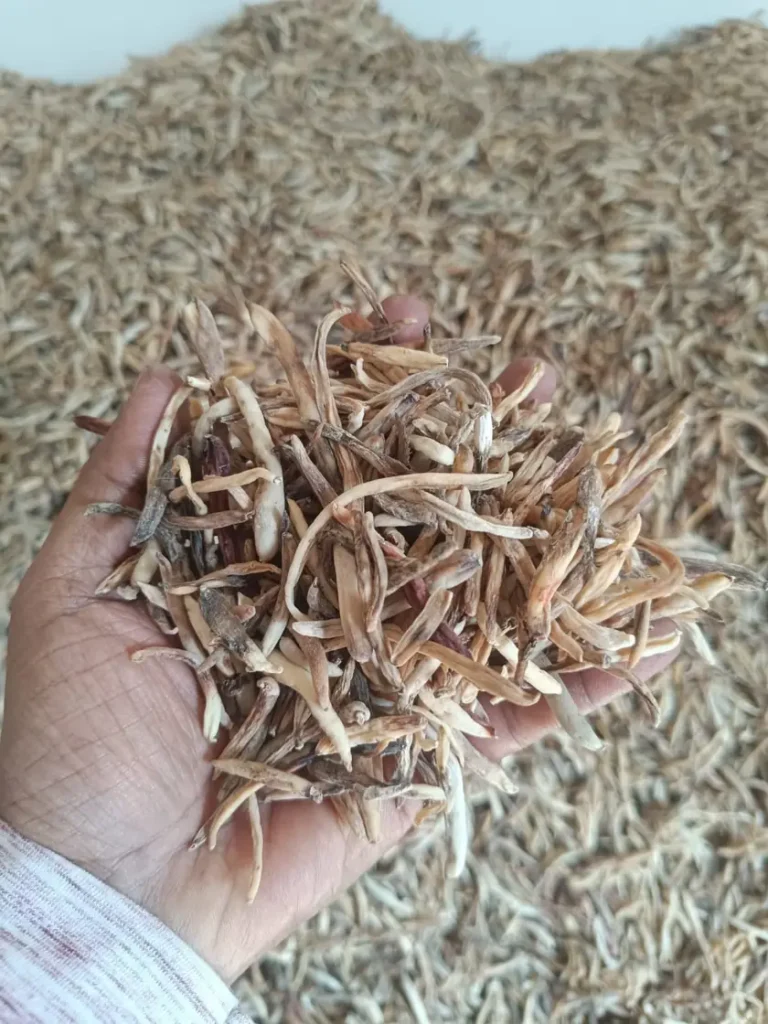
“As you can see in my hand here, this is what ‘Ragda’ looks like. It isn’t ‘fake’ Musli, but it is material that has lost its premium status. If you are buying powder and it looks very dark or smells a bit musty, it might have been made from this lower-grade Ragda. This is why we insist on using a Solar Tunnel—to prevent this from ever happening to our premium stock.”
Safed Musli from Soil to Storage
The Critical Post-Harvest Secrets of Safed Musli
At Riddhi Healthcare, we know that Safed Musli quality is not just grown—it is preserved. The difference between premium “White Gold” and low-value material often comes down to the few hours and days immediately following the harvest.
The Peeling Window: Why Timing and Humidity Matter
Most people assume peeling is a standard step, but as experts on the ground, we know it is a race against the atmosphere.
- The Freshness Factor: Peeling is easiest when the harvest is fresh. As time passes, the skin begins to stick to the roots, making processing difficult and potentially damaging the quality. Vikaspedia notes that manual peeling is a laborious but essential step to maintain root integrity.
- The Humidity Secret: In our region, harvesting often starts in September. During this time, high humidity helps keep the skin loose. Farmers often keep the roots covered with moist soil to preserve this state, allowing for easy finger-peeling.
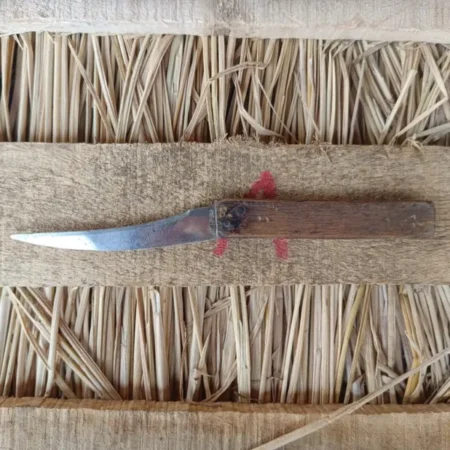
- The Specialized Knife: Once the monsoon fades and humidity drops, the skin sticks tightly to the inner white tuber. At this stage, only a specialized small knife can do the job properly.
The Harvest Trap: Immature vs. Mature Roots
A major industry secret is the “September Harvest.” Many farmers harvest early (September/October) to catch higher initial market prices. However, Safed Musli is typically a 4–5 month crop. Harvesting too early results in immature roots that lack the full medicinal potency of a mature crop harvested in the winter months. Apni Kheti
The Drying Mastery: Sun vs. Technology
Properly processed Safed Musli must be dried until it reaches a “perfect” moisture level—typically under 5%—to ensure shelf stability.
International Journal of Current Microbiology and Applied Sciences
- The 3-Day Rule: In bright, sunny conditions, 3–4 days of direct sun is usually sufficient to dry the roots thoroughly.
- The “Cold Press” Moisture Check: While many look for a “snap,” experienced traders judge by feel. When you press a handful of roots in your palm, you can actually feel the coldness of remaining moisture even if they look dry to the eye.
- Our Solar Advantage: At Riddhi Healthcare, we don’t leave quality to chance. If a farmer brings us stock that still contains moisture, we use our Solar Tunnel facility. These tunnels use controlled solar heat to dry the roots completely and hygienically, preventing the darkening (Ragda) that happens when traditional drying fails.
Food and Agriculture Organization - “While many claim to use advanced technology for every step, as a scientist (B.Sc. Chemistry), I know that nature is the best dryer. We primarily sun-dry our Musli to maintain its natural ‘Prana’ and enzymatic profile. However, we maintain a Solar Tunnel facility as a critical backup. During post-monsoon overcast days or when the humidity in Valsad rises, we move our stock into the Solar Tunnel to prevent microbial ‘Ragda’ (spoilage). This ensures our buyers in high-humidity areas like Mumbai, Chennai, and Palakkad receive a stable, mold-free product.”
Safed Musli Per Acre Production
Safed Musli (Chlorophytum borivilianum), a prized Ayurvedic herb known for its vitality-boosting properties, thrives in the fertile soils of Gujarat’s Valsad region. As someone with a BSc in Botany and years of direct sourcing from local farmers at Riddhi Healthcare, I’ve gained firsthand insights into its cultivation. We procure the finest quality tubers straight from these dedicated growers, who manage small plots measured in gunthas—but I’ve scaled the numbers here to a full acre for clarity.
In Valsad, a well-managed acre typically yields 1,500 kg to 2,500 kg of fresh, wet Safed Musli tubers at harvest. This range hinges on key factors like soil quality (loamy, well-drained soils work best), the health of planting material, and the farmer’s expertise in irrigation and pest management. After harvesting, the tubers undergo washing, peeling, and sun-drying to preserve their potency.
The real magic happens post-processing: from those fresh tubers, farmers extract 200 kg to 300 kg of premium dry Safed Musli per acre. This dried form is what powers our high-quality products at Riddhi Healthcare, ensuring purity and efficacy for wellness needs.
These figures reflect real-world practices in my area, where small-scale farming emphasizes sustainability over mass production. If you’re a farmer or aspiring cultivator, focusing on organic methods and optimal spacing (about 10,000-15,000 plants per acre) can push yields toward the higher end.
The Botanist’s Lab—How to Spot Fake Safed Musli and Market Adulteration
In my years of managing both a bulk supply chain and a traditional heritage pharmacy, I have seen every trick used to sell “fake” or inferior Musli. Most traders look at the color; as a botanist, I look at the cellular integrity and the chemical profile.
1. The “Sudani Musli” Myth: Botanical Fact vs. Market Fiction
One of the biggest scams in the current market is the labeling of roots as “Sudani Musli.” From a botanical perspective, Chlorophytum borivilianum is a native Indian species. There is no verified commercial cultivation of this specific medicinal plant in Sudan. Often, these are unrelated, inferior roots imported and “branded” to sound exotic. If a supplier cannot tell you the Indian village of origin, you are likely looking at a botanical fake.
The “Sudani / Russian Musli” Truth (The Image)
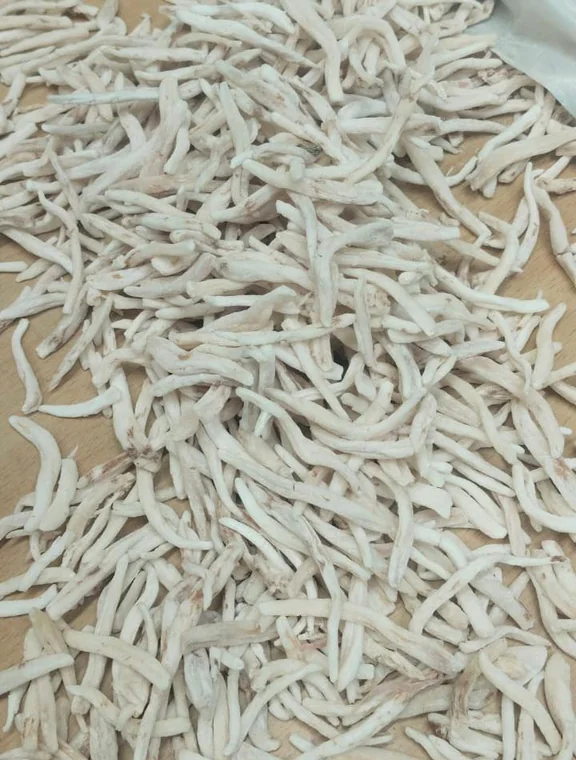
The provided image is often misrepresented as “Sudani Musli” or “Russian Musli”.The image reveals the following:
- Morphological Red Flags: Authentic Safed Musli (Chlorophytum borivilianum) tubers have a natural, irregular shape, unlike the uniform appearance of the image.
- The Saponin Void: The “Sudani” or “Russian” fakes lack the quality of real Indian Musli. They provide weight, but no medicine.
- The Supply Chain Lie: There is no commercial cultivation of medicinal Safed Musli in Russia or Sudan that meets Ayurvedic pharmacopoeia standards.
2. The “Weight” Trick: Moisture vs. Potency
Farmers often sell Musli that is “market-dry,” but as a chemist, I know that even a small amount of hidden moisture (over 10-12%) is dangerous.
- The Test: A pure, fully dried Safed Musli finger should have a clean “snap” when broken. If it bends or feels “rubbery,” the saponins are diluted by water weight, and the root is prone to internal fungal growth (which we call “Ragda”).
- Our Standard: At Riddhi Healthcare, we absorb a 10% weight loss by further drying our stock in solar tunnels until it reaches a stable, high-potency state.
3. Adulteration in Powder: The Starch and Chalk Threat
Because pure Safed Musli powder is expensive, many shops mix it with cornstarch, chalk powder, or even “ground-up” waste roots.
- The Taste & Texture Test: Pure powder has a very specific, slightly earthy, and “mucilaginous” (sticky) feel when mixed with a drop of water. If the powder feels “gritty” or doesn’t become slightly sticky, it has been adulterated.
- The Color: Authentic powder from Grade-A roots should be a creamy ivory—not pure “bleached” white and definitely not brownish.
The “Aroma” & “Visual” Check: A Scientist’s Guide to Bleaching
In my laboratory and pharmacy practice, I always tell customers: “Trust your nose before your eyes.”
- The Authentic Scent: Pure Chlorophytum borivilianum has a mild, sweet, and earthy aroma. It should smell like the soil it grew in.
- The Chemical Red Flag: If you open a bag of Safed Musli and smell a sharp, pungent, or “swimming pool” (chlorine/bleach) scent, stay away. To achieve a “pure white” look for the market, some traders use bleaching agents. This doesn’t just change the color; as a chemist, I can tell you it damages the delicate botanical compounds.
- Natural Aging: Authentic Musli is like silver—it patinas. A slight, natural yellowing over 6–12 months is a sign that the root is natural and untreated. If it stays “snow-white” forever, it has likely been chemically altered.
Why we Buy in Small Batches directly from the farmers.
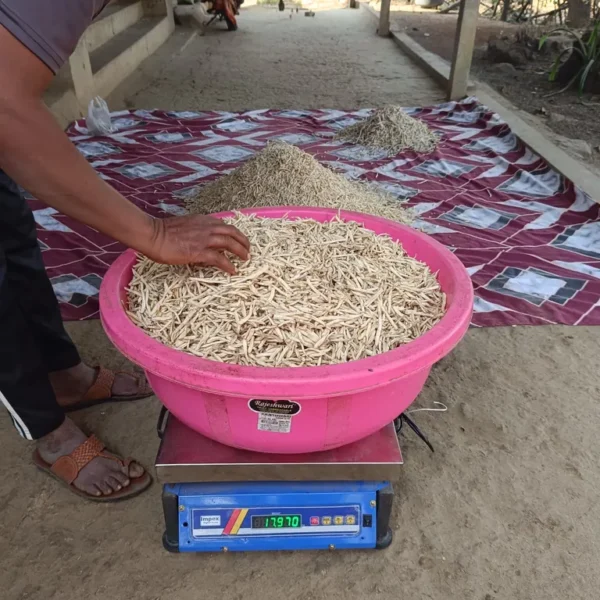
Most bulk suppliers buy pre-packed 50kg bags from middlemen. At Riddhi Healthcare, we do the opposite. As seen in this photo, we are on the ground in the villages, purchasing in small, hand-inspected quantities—sometimes just 17.97kg at a time.
Why this “Slow Sourcing” matters to you:
- Direct Botanical Inspection: As a botanist, I don’t just “see” a bag; I inspect every tub. I am checking for the specific “finger” morphology of Chlorophytum borivilianum before it even enters our facility.
- The Moisture Audit: This is where our “10% Weight Loss” journey begins. I can feel the moisture in the tubers right here at the scale. If it’s too high, we adjust the price or the drying time immediately.
- No Middlemen, No Adulteration: Because we buy directly from the farmers’ small heaps (seen in the background), there is zero chance of “Sudani” or “Russian” fakes being mixed in at a large warehouse.
The Cold Storage Standard—Preserving the “Prana” of Musli
In the bulk trade, summer is not the enemy—the Monsoon is. As a chemist, I know that once the humidity rises in June, the risk of microbial “Ragda” increases. At Riddhi Healthcare, we don’t just “store” Musli; we preserve its botanical integrity using a strict professional protocol:
- The Jute Bag Tradition: Unlike plastic, which traps “sweat” and moisture, we keep our stock in breathable Jute bags. This allows the tubers to “breathe” naturally, maintaining their ivory color and preventing fungal rot.
- Precision Temperature Control: Before the rains arrive, we transfer our remaining stock to cold storage maintained strictly between 6°C and 12°C. This temperature range is the “Sweet Spot”—it is cold enough to stop insect activity and moisture degradation, but stable enough to preserve the delicate saponins.
- The October Advantage: Most of our stock clears by June. Why? Because the market knows that by October, Riddhi Healthcare will be the first in India to deliver the new harvest. While others are still selling last year’s “cold-stored” stock, we are already providing the fresh, high-potency “White Gold” of the new season.
The Botanist’s Checklist—How to Identify Original Safed Musli
In a market flooded with “Sudani” fakes and chemically bleached roots, how do you protect your investment? As a botanist, I recommend these four simple checks before you buy:
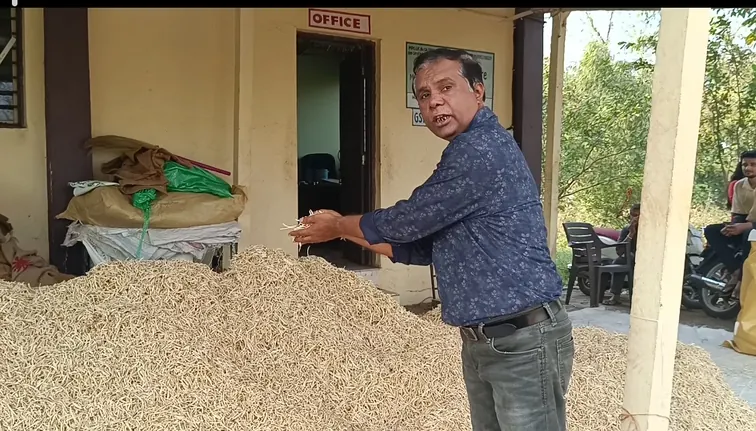
- The Color Test (Off-White/Ivory): Pure Chlorophytum borivilianum is never “snow white.” As you can see in the heap I am holding in this photo, the natural color is a creamy ivory. If it looks like it was dipped in white paint, it has been bleached.
- The Texture & Shape: Look for the natural, fibrous “finger” morphology. If the roots are perfectly uniform and thick like plastic sticks, they are likely the botanical fakes we discussed.
- The “Snap” vs. “Bend” (Dryness): Take a single finger and break it. It should “snap” cleanly. If it bends or feels rubbery, it contains excess moisture that will lead to “Ragda” (spoilage).
- The Aroma: It should have a mild, sweet, earthy scent. A sharp, chemical, or chlorine-like smell is a sign of artificial treatment.
Verification Service: Are you unsure about a batch you’ve purchased elsewhere? Or do you need a live video of our current premium stock?
Chat with our representative directly on WhatsApp:
📲 +91 6352178985
(Send a photo of your Musli for a free botanical evaluation)
Applications of Original Safed Musli in Industry (The Tiers of Quality)
Safed Musli is the backbone of several multi-billion dollar industries. However, not all Musli is created equal for every application:
- Ayurvedic Classical Formulations:
- The Grade: Premium, hand-peeled, ivory-white fingers.
- The Requirement: For Churnas (powders), Ghritas, and Lehyams, the whole root is consumed. Therefore, the color, aroma, and “Satvik” purity must be perfect. This is the “Gold Standard” we supply to traditional practitioners and heritage brands.
- Nutraceuticals & Gym Supplements (Standardized Extracts):
- The Grade: Commercial/Extraction Grade (including some ‘Ragda’ or browned roots).
- The Science: As a chemist (B.Sc.), I can explain that the solvent extraction process isolates the Saponins and filters out the color and texture issues. This is why the extraction industry can use lower-grade material—the final “20% Saponin Extract” will still be potent, even if the raw root wasn’t “pretty.”
- Herbal Brands & Retail Packagers:
- The Grade: Grade-A Powder or Tuber.
- The Requirement: These brands need a product that looks beautiful on a retail shelf and passes strict microbial lab tests. Our Solar Tunnel backup ensures that our retail-bound stock is always mold-free and stable.
The Mountain of Purity—Why We Personally Sort Every Batch
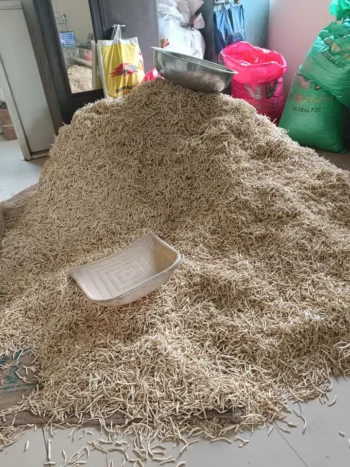
“At Riddhi Healthcare, quality isn’t just a certificate; it’s a physical reality you can see. This ‘mountain’ of Safed Musli in our Valsad facility represents the final stage of our botanical vetting process. Using traditional winnowing baskets (seen here), we manually sift through the bulk to remove any broken bits (Chura) or dust. This ensures that every ‘finger’ that reaches our clients from Jammu to Chennai is clean, potent, and botanically perfect.”
Pan-India Logistics for Safed Musli: From 100 Grams to 1 Metric Ton
At Riddhi Healthcare, we believe every customer deserves the same “Botanist-Verified” quality. Whether you are a local Vaidya in Palakkad (Kerala) ordering 500 grams for a patient, a famous influencer in Jammu & Kashmir sourcing for his followers, or a large-scale manufacturer in Kolkata or Mumbai requiring 1,000kg—our standards never change.
We bridge the gap from the southernmost tip of India to the northernmost peaks, and from the eastern borders to the western coast. For us, every client is a partner in preserving the legacy of “White Gold.”
Modern Packaging for Botanical Integrity
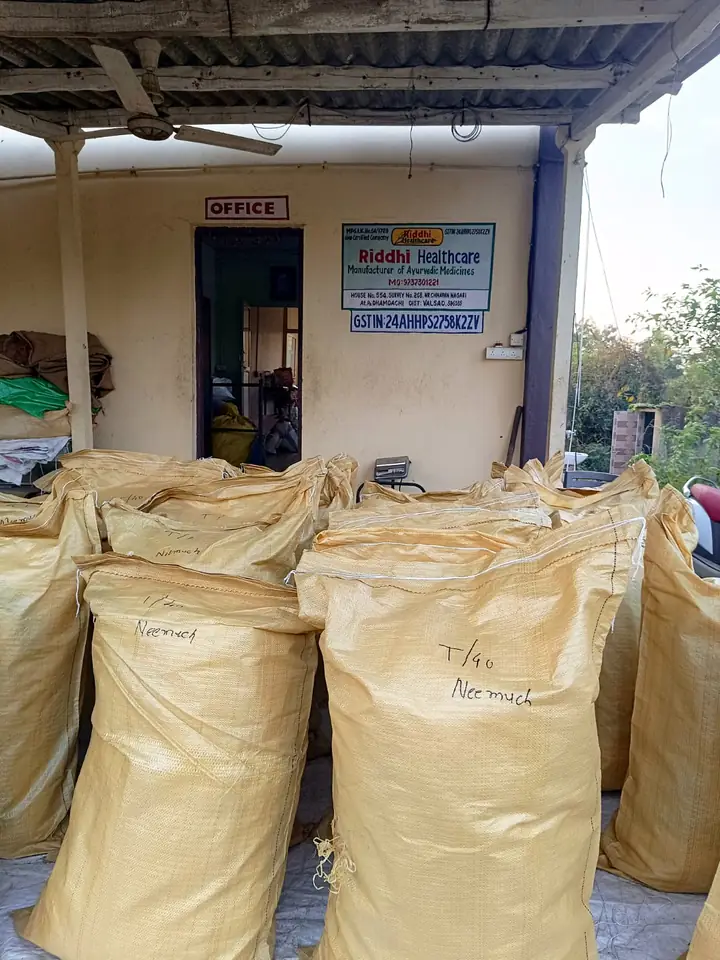
As you can see in our dispatch area, we don’t just “bag” our Musli; we secure it.
- Tamper-Proof Sealing: While many traditional traders still use a needle and thread (Sui-Dhaaga), we use professional bag closure machines. This ensures the bag is airtight, prevents “weight-theft” or adulteration during transit, and maintains the moisture-controlled state we worked so hard to achieve.
- Breathable Jute & HDPE: We choose the right layering to ensure the roots “breathe” without absorbing the humidity of the Indian monsoon during their long journey to your doorstep.
The “Kashmir to Kanyakumari” Testimony—Small Parcels, Big Trust
Why do experts from the valleys of Baramulla, Jammu & Kashmir, source their Safed Musli from a botanist in Valsad, Gujarat? Because in the world of high-end herbalism, purity has no borders.
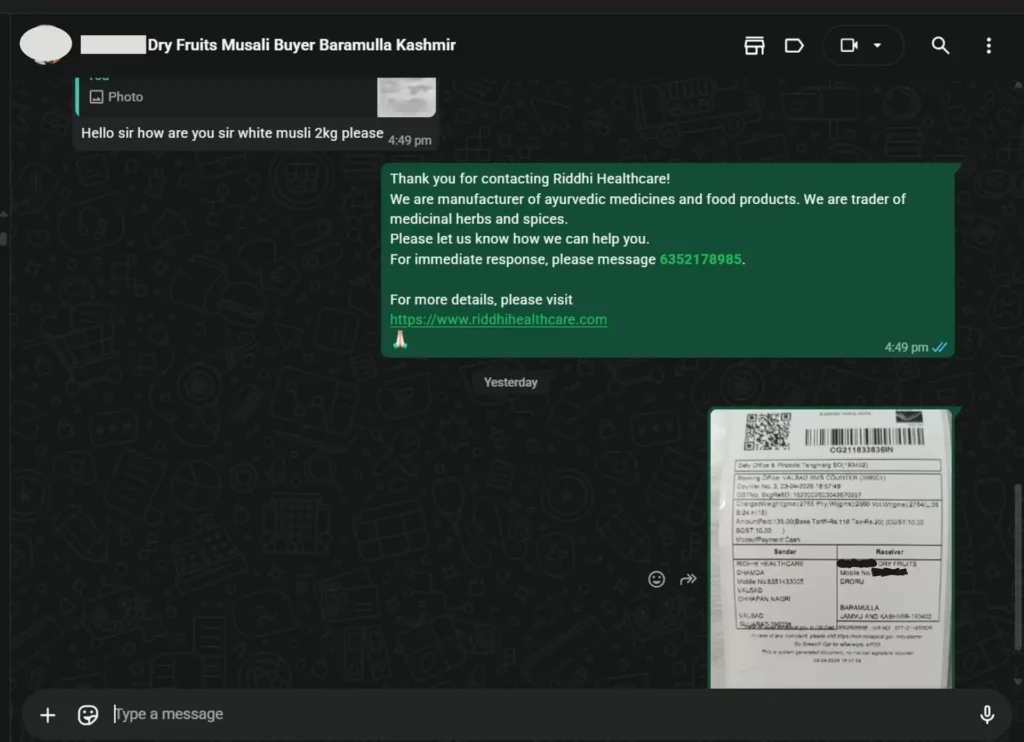
- The Proof of Sourcing: This India Post receipt shows a 2,755g (approx. 2.7kg) dispatch to one of Kashmir’s most respected herbal and dry fruit influencers.
- Scale is Irrelevant, Quality is Absolute: Whether it is a 2kg parcel for a boutique specialist in Baramulla or a 1-ton dispatch to a manufacturer in Amritsar, every gram undergoes the same Botanist-Verified inspection at Riddhi Healthcare.
- National Logistics: From the RMS Counter in Valsad to the snow-capped peaks of Tangmarg, our “White Gold” is tracked, secured, and delivered in its most potent, “snap-dry” state.
Safed Musli Supplement Manufacturer
If you are looking for a Safed Musli Supplement Manufacturer, Riddhi Healthcare is the best choice.
Riddhi Healthcare, procures best safed musli directly from the trusted farmers. Keeps the follow up with the progress of crop. Procurement of Safed Musli at Riddhi Healthcare is done directly by the owner Dharmesh Bhai – Botanist, who has a great experience with Safed Musli and his brother Dr. Pinesh Shah (BAMS). As the raw safed musli at Riddhi Healthcare is of the best quality, you will get the best quality Safed Musli Supplement.
At Riddhi Healthcare, Safed Musli Powder has been approved as Svet Musli Churna by Ayush (FDCA) The name Svet Musli gives some uniqueness in the name, canceling some of the market noice.
If you are the manufacturer of Safed Musli Supllement, Riddhi Healthcare must be your source for procuring Best Quality Safed Musli, because of the above mentioned advantages.
The Riddhi Healthcare Commitment
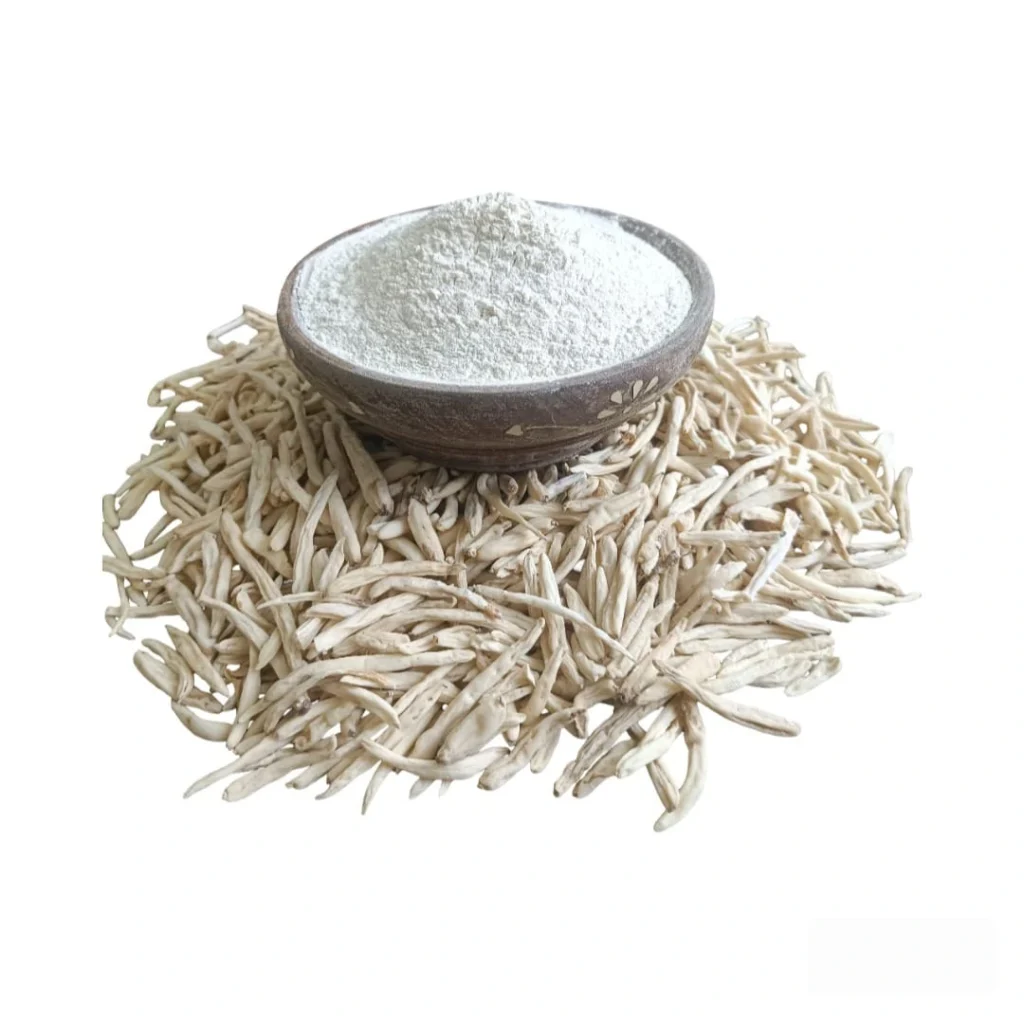
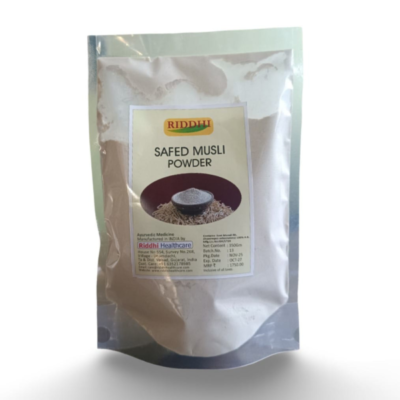
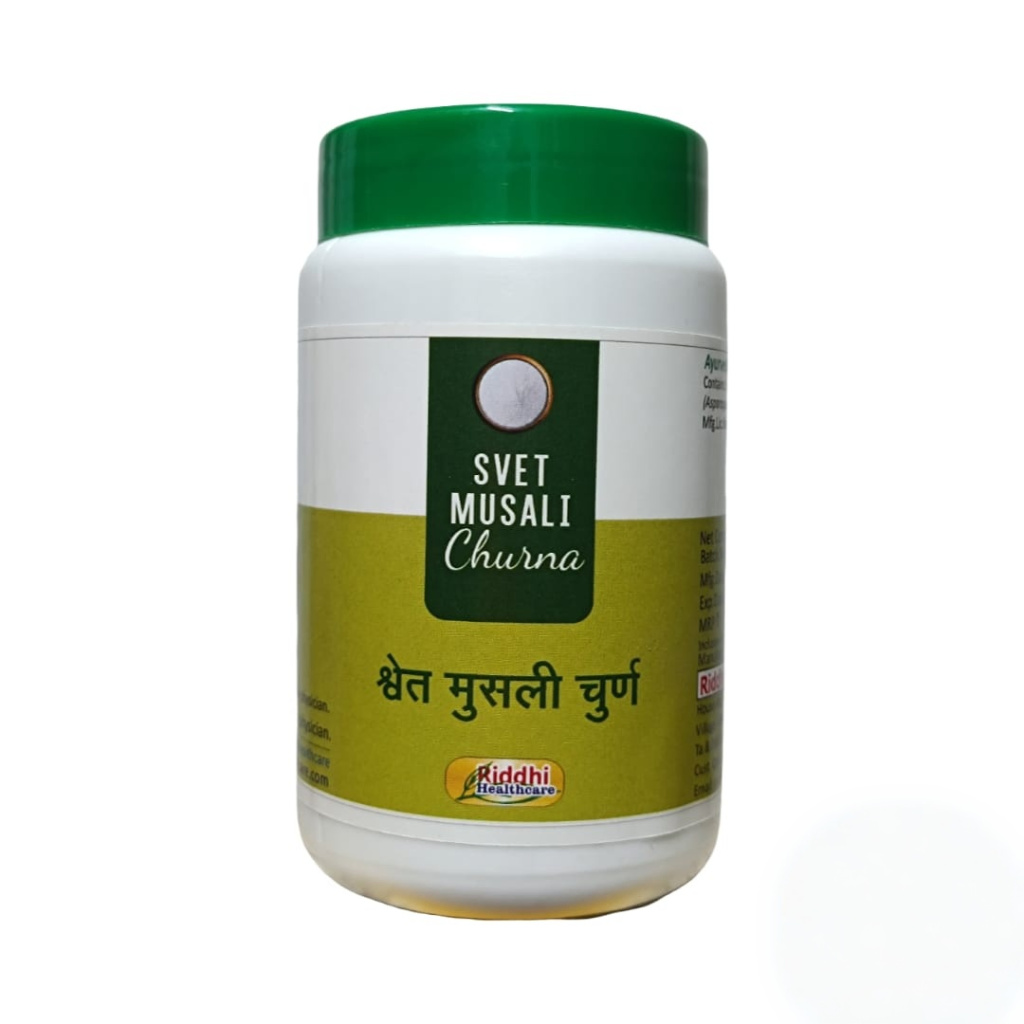
👉 “सही माल पहचानना ही असली समझदारी है”
Frequently Asked Questions
Q1. Can Safed Musli be taken daily?
Yes, when taken in moderate dosage, it is safe for daily consumption.
Q2. How long does it take to see results?
Typically 3–6 weeks with consistent use.
Q3. Is Safed Musli good for men only?
No, it benefits both men and women for strength and overall wellness.
Q4. Can I take it without milk?
Yes, but milk enhances its effectiveness.
Q5. Does Safed Musli help in weight gain?
It supports healthy weight gain when combined with proper diet.